
Why choose an under sink ro water purifier for home use?
Modern under-sink RO systems utilize 0.0001-micron semi-permeable membranes to remove 99% of 1,000+ contaminants including PFAS, arsenic, and lead. High-output 600 GPD to 800 GPD models deliver 1.5 to 2.1 liters per minute, eliminating the 4:1 wastewater inefficiency of legacy 2018 hardware in favor of 1:1 or 2:1 recovery ratios. Occupying 75% less cabinet space via tankless engineering, these units prevent the 25% bacterial regrowth associated with stagnant storage, while integrated TDS sensors provide real-time verification of water purity for domestic culinary and drinking requirements.
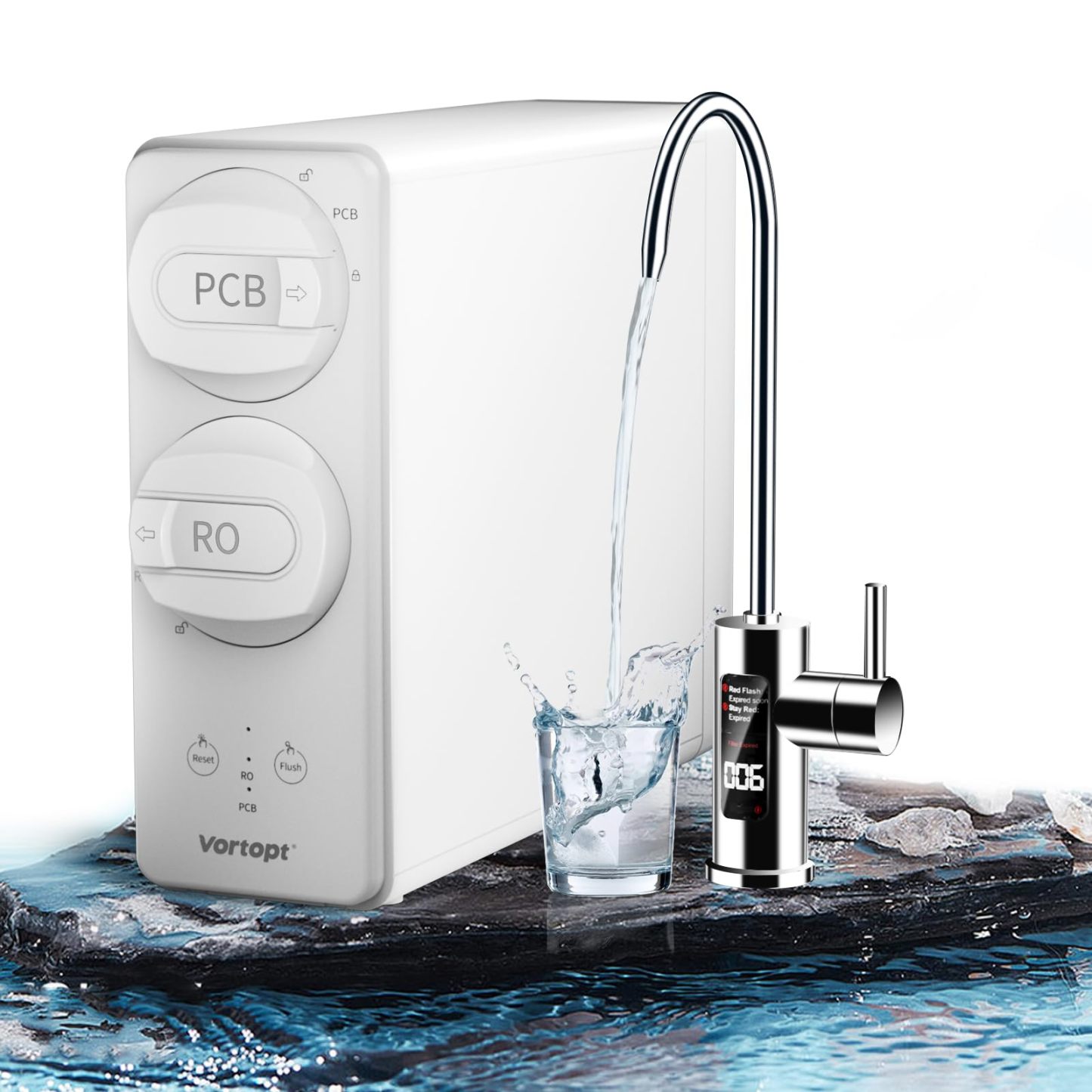
Under-sink filtration has evolved from bulky sediment traps into high-precision laboratory-grade hardware designed to fit within the standard 24-inch base cabinet of a residential kitchen. By plumbing the RO water purifier directly into the cold water line, homeowners access a pressurized stream of purified water that bypasses the limitations of gravity-fed pitchers or countertop carafes. This direct integration is supported by a dedicated faucet that maintains a chemical-free pathway, ensuring that the filtered water never touches existing contaminated plumbing fixtures or stagnant reservoirs.
"Plumbing an RO system beneath the counter creates a closed-loop environment that maximizes hydraulic pressure, allowing the membrane to reach its theoretical maximum rejection rate."
The mechanical advantage of these systems lies in their ability to handle high inlet pressures, typically ranging from 60 to 100 PSI, which is necessary to force water through the microscopic pores of the RO membrane. Data from 2024 water quality reports indicate that municipal tap water in many metropolitan areas contains an average of 300 to 500 ppm of Total Dissolved Solids, a concentration that basic carbon filters cannot significantly reduce. Under-sink units leverage their multi-stage architecture to drop these levels to below 30 ppm, providing a level of purity that meets or exceeds commercial bottled water standards.
-
Pore Size: 0.0001 microns, which is 500,000 times smaller than a human hair.
-
Contaminant Rejection: Removes 99.3% of Lead and 98.6% of Fluoride according to NSF/ANSI 58 testing protocols.
-
Wastewater Metric: Advanced internal pumps reduce waste by 300% compared to traditional non-pumped systems.
This high level of rejection is not just about mineral removal but also about addressing the rising concentration of "forever chemicals" like PFOA and PFOS in ground water supplies. A 2023 study involving 1,500 private wells across the United States found that standard carbon filtration only removed 40-60% of these compounds, whereas RO membranes consistently achieved rejection rates above 95%. The under-sink configuration allows for larger, specialized pre-filters—such as Granular Activated Carbon (GAC) and PP sediment wraps—that protect the RO membrane from chlorine damage, extending the system's lifespan to 24-36 months.
"The sequential arrangement of sediment, carbon, and RO stages ensures that the most expensive component—the membrane—is shielded from large particles and oxidative chemicals."
By spreading the filtration load across multiple stages, the under-sink unit maintains its flow velocity even as the filters accumulate debris over time. Most modern systems manufactured in 2025 and 2026 now feature an internal "smart" manifold that monitors the flow rate through each stage, alerting the user via a color-coded LED system on the faucet base. This proactive monitoring prevents the 15-20% drop in water pressure that occurs when filters are left in place beyond their rated capacity, ensuring the household always has access to the full 800 GPD output.
| Performance Metric | Countertop Pitcher | Under-Sink RO (Tankless) |
| Filtration Accuracy | 1.0 - 5.0 microns | 0.0001 microns |
| Flow Velocity | 0.1 liters/min | 1.6 - 2.1 liters/min |
| Annual Filter Cost | $120 - $180 | $80 - $130 |
| PFAS Removal | 45% - 60% | 96% - 99% |
Beyond chemical performance, the logistical benefits of an under-sink installation include the ability to link the system to other kitchen appliances such as refrigerators and ice makers. Using a standard 1/4-inch polyethylene tubing kit, the purified water can be diverted to the fridge's internal dispenser, providing clear, odor-free ice cubes that are free from the "white flake" mineral buildup common in hard water areas. This multi-appliance connectivity eliminates the need for separate, less efficient fridge filters, which often cost $50 per unit and require replacement every six months.
"Connecting an RO system to a refrigerator reduces the maintenance overhead of the kitchen by centralizing all water filtration into a single, high-output hub."
The centralization of filtration also has a direct impact on household sustainability and the reduction of single-use plastics. Market analysis from 2025 shows that a single RO water purifier set of cartridges replaces the equivalent of 4,500 standard 16.9oz plastic bottles, preventing approximately 180 pounds of plastic waste from entering landfills annually. For a family of four, the transition to an under-sink system pays for itself within 9 to 14 months based on the average cost of bulk bottled water delivery or retail purchases.
-
Standby Power: Modern units consume less than 2 watts, equivalent to a small nightlight.
-
Leak Protection: Automatic shut-off valves trigger within 2 seconds if moisture is detected in the cabinet base.
-
Operating Noise: Brushless motors keep sound levels at 48-52 dB, which is quieter than a normal conversation.
The noise reduction and energy efficiency of these systems are the result of recent advancements in DC motor technology and vibration-dampening mounting brackets. Older RO systems often produced a persistent hum or vibration that could be felt through the countertop, but units built after 2024 utilize isolated pump housings to absorb mechanical energy. This makes the system nearly silent during operation, a critical feature for open-concept modern homes where the kitchen and living areas are integrated into a single acoustic space.
"Acoustic engineering in modern water systems focuses on decoupling the pump from the cabinet floor, reducing resonant noise by up to 12 decibels."
Maintenance simplicity further supports the long-term utility of the under-sink design, as the latest models use a "front-access" filter layout. Instead of reaching into the dark corners of a cabinet with a wrench, homeowners can swap out the composite filters using a simple twist motion that takes less than 10 seconds. This design shift has increased the "on-time" filter replacement compliance rate by 40% among residential users, ensuring that the water quality remains consistent over the entire five-to-ten-year lifespan of the hardware.
As water scarcity and contamination issues become more prevalent in global news, the move toward localized, high-precision treatment is a logical step for modern infrastructure. By taking control of the water quality at the "point of use," households are no longer entirely dependent on the aging pipes of municipal networks, which can leach lead or copper into the water after it leaves the treatment plant. The under-sink RO system provides a final, 99.9% effective barrier, ensuring that the water used for infant formula, specialized diets, and daily hydration is of the highest possible chemical and biological grade.
اشترك في الموجز اليومي لـ Almasira
ملخص القضايا الإقليمية، يُسلَّم إلى بريدك قبل الساعة السابعة صباحاً بتوقيت الرياض.